
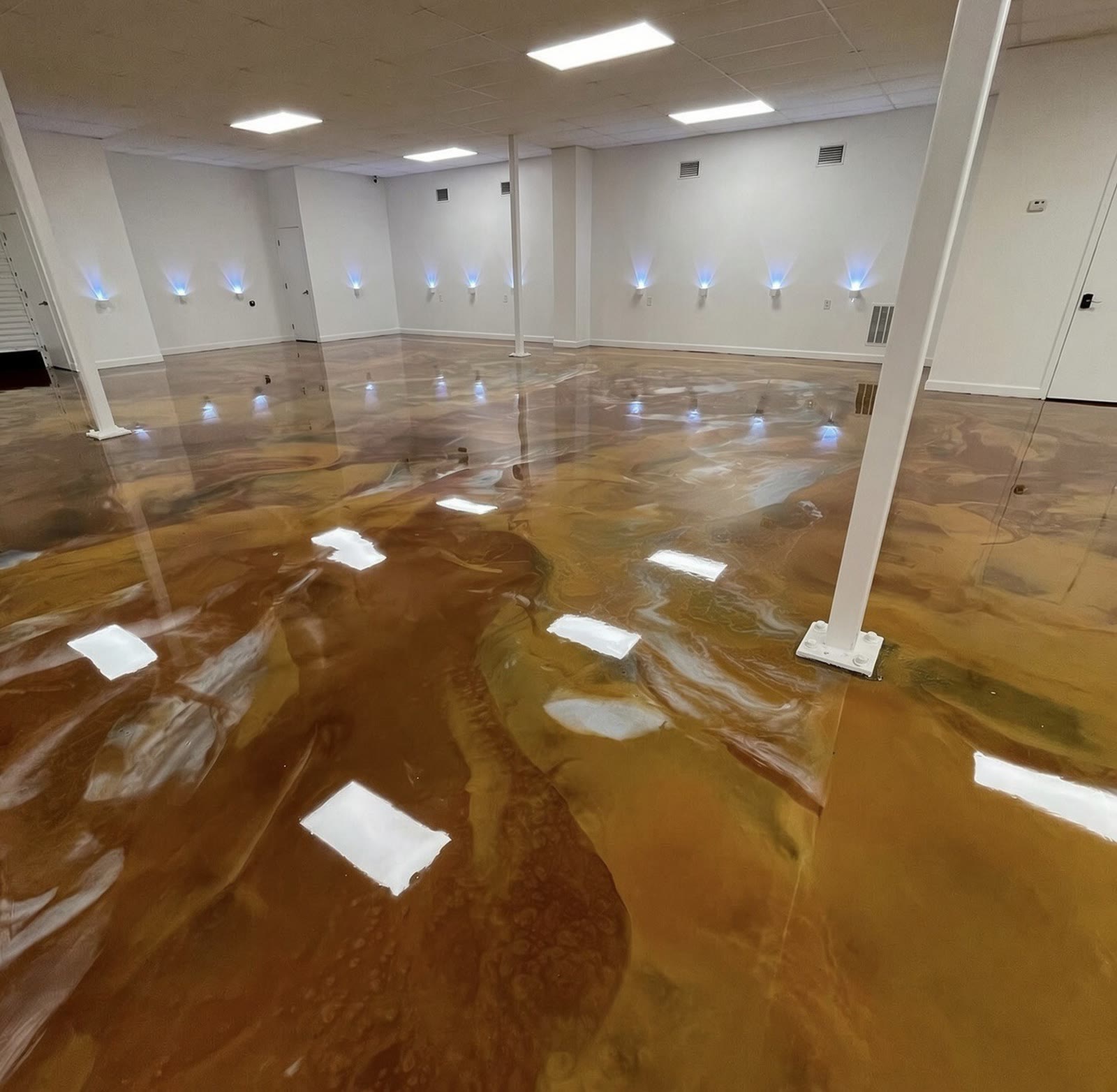
Four systems. One standard.
Every floor I install starts the same way, with the concrete mechanically opened up. What changes after that is the finish, the traffic it has to take, and what the space is for.
Pick the floor, not the buzzword.
Four systems cover almost every job that comes through the door. Here is what each one actually is, in plain terms, with the spec underneath it.
Full broadcast hybrid flake
A 3 coat hybrid epoxy and polyaspartic system with vinyl flake broadcast to full refusal, then scraped, sanded and sealed. The workhorse: garages, shops, commercial floors.
 02
02
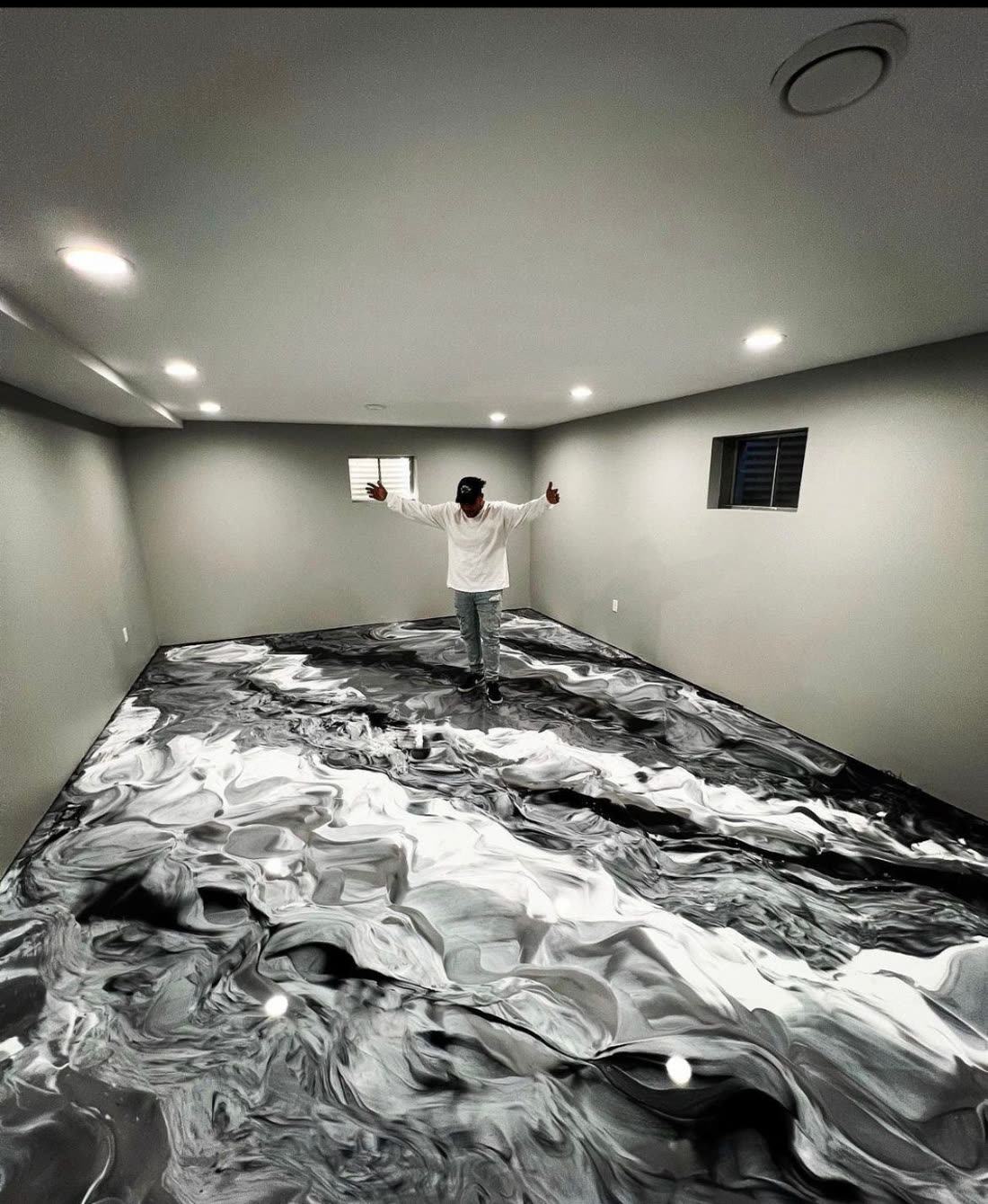
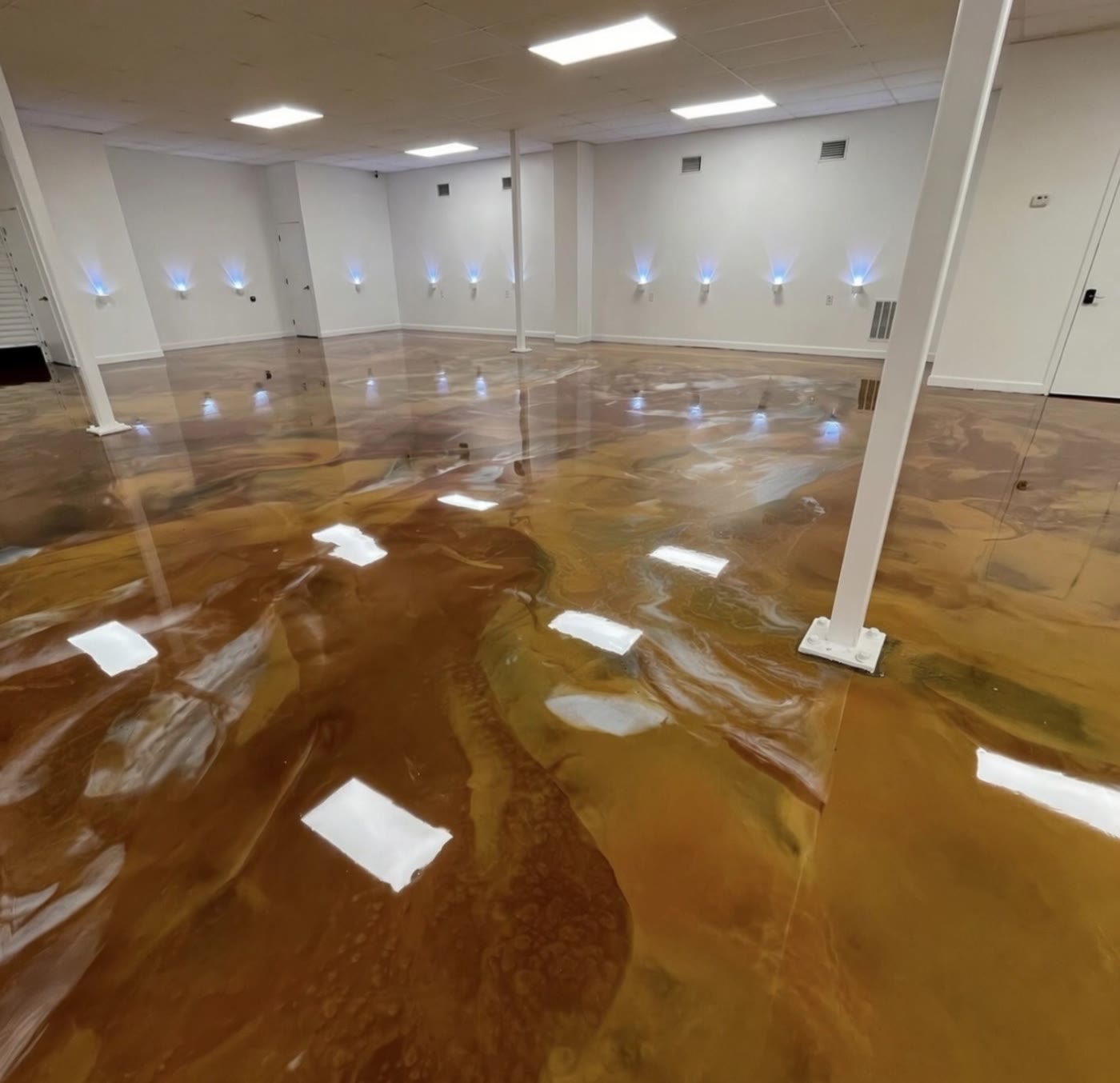
Metallic four coat resin
The one the class is built around. A moisture vapor barrier, a self leveling resin primer, a thick multi color resin design, then a sealer. This is the gallery floor.
 03
03
Self leveling flooring
Self leveling concrete poured to correct a slab that has gone out of flat. Sometimes the finished floor, more often the thing that has to happen before anything else can.
 04
04
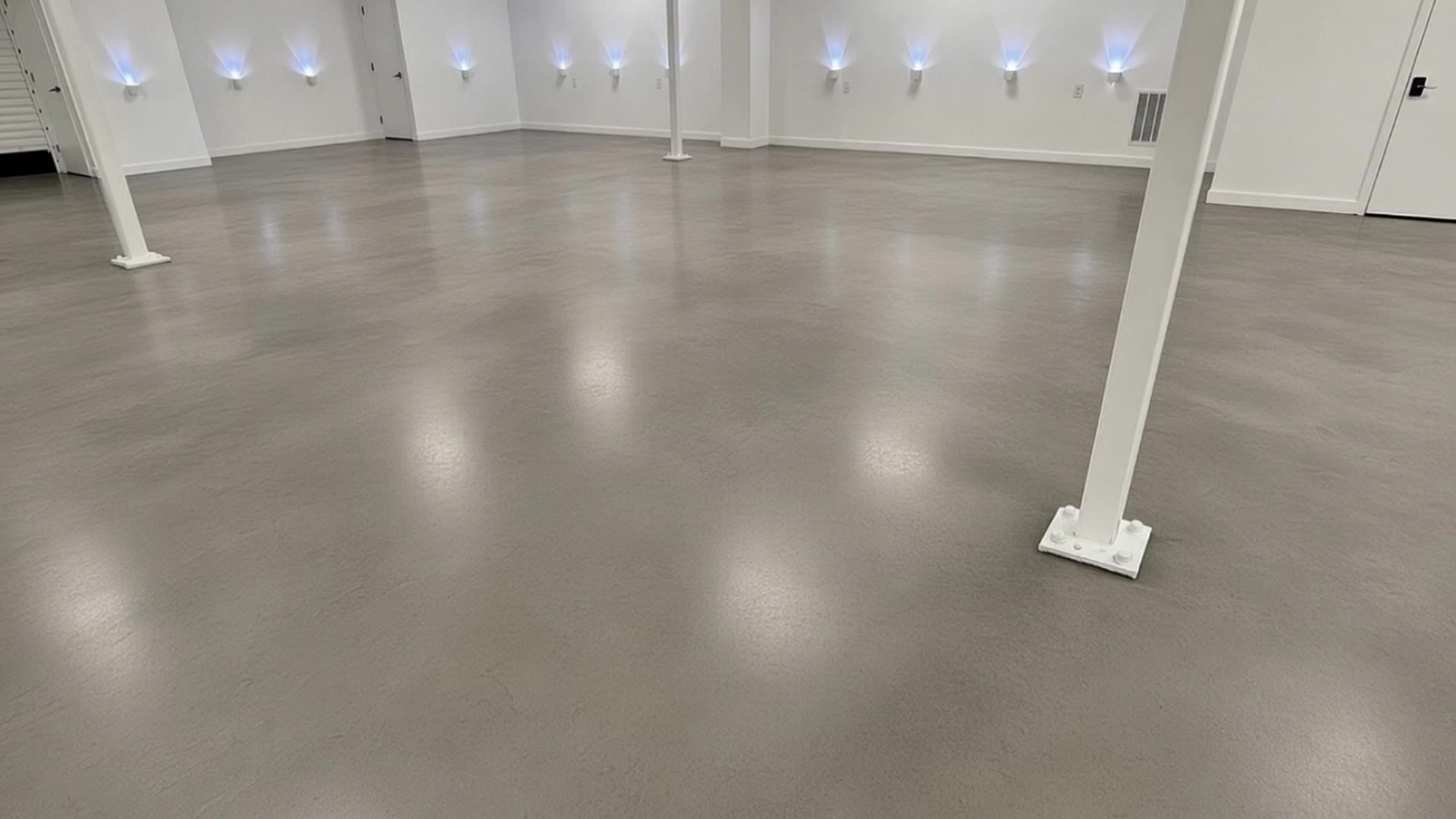
Polished concrete
No coating at all. Multi grit diamonds mechanically grind and naturally polish the slab you already have, densified so it holds the shine instead of dusting out.
Three coats, built in front of you.
A hybrid epoxy and polyaspartic flake floor, installed for adhesion, moisture protection, durability, chemical resistance and a finish that still looks right in five years. Step through it.
| System summary, full broadcast hybrid flake | ||
|---|---|---|
| Prep | Mechanical preparation | Diamond grind, open the pores, cut the profile, clean and vacuum, repair minor imperfections. |
| Coat 1 | Hybrid moisture vapor barrier epoxy | Commercial grade. Bonds to the substrate and holds back moisture vapor coming out of the concrete. |
| Coat 2 | Pigmented polyaspartic, full broadcast flake | Flake broadcast to refusal into the wet coat for appearance, texture, thickness and wear resistance. |
| Prep | Scrape and sand the flake surface | Loose and excess flake removed, surface brought to a consistent profile for the final coat. |
| Coat 3 | Clear polyaspartic protective finish | Abrasion, chemical and stain resistance, UV stability, easier maintenance. |
Four coats, poured by hand.
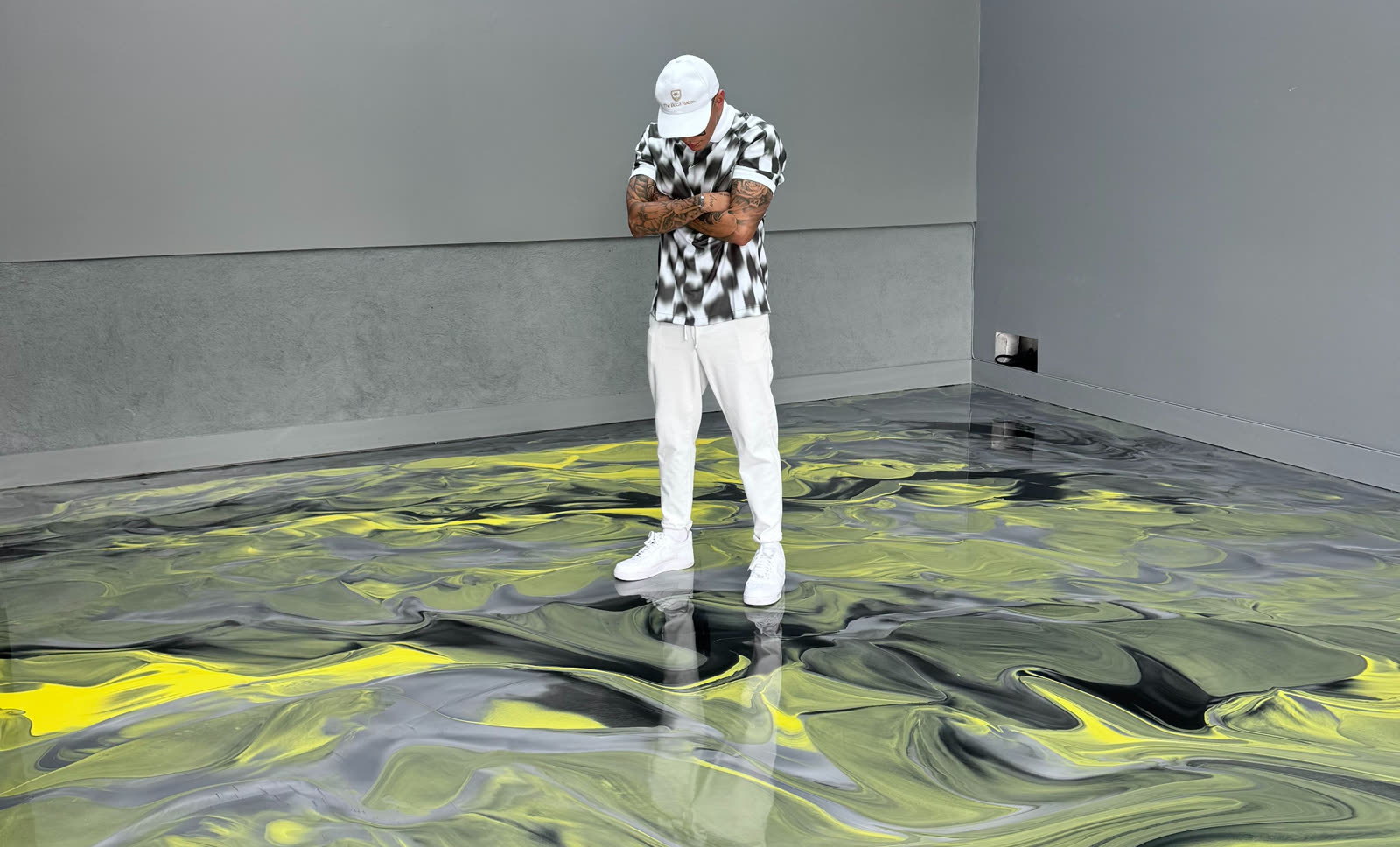
This is the floor the whole business was built on, and the one I teach. No two are the same, because the design is poured, not printed.
| Metallic four coat resin system | ||
|---|---|---|
| 01 | Moisture vapor barrier | Same principle as the flake system. Nothing goes down over a slab that can push moisture back up through it. |
| 02 | Self leveling resin primer | Levels and primes in one, so the design coat has a flat, sealed surface to move across. |
| 03 | Thick multi color resin design | The pour. Multiple colors worked wet, at a deliberately heavy build rate. |
| 04 | T200 sealer or matted urethane | Gloss or matte, depending on how much shine the room can carry. |
The design coat is poured at 100 square feet per 3 gallons. That is a heavy build on purpose. It is what gives the metallic its depth instead of a thin painted look.
When the slab is the problem.
Self leveling concrete, poured to bring a floor back to flat. Plenty of jobs need this before a coating system is even worth discussing, and on some jobs it is the finished floor.
- Corrects slabs that have gone out of level
- Gives coating systems a flat surface to sit on
- Can be the finish, or the foundation for one
The floor you already own.
Multi grit diamonds mechanically grind and naturally polish the concrete. No coating goes on top of it. The shine is the slab itself, refined, then locked in with a densifier so it stops dusting and holds up to traffic.
The training and the materials.
Two things people ask for constantly once they have seen the floors: how to do it, and what to do it with.
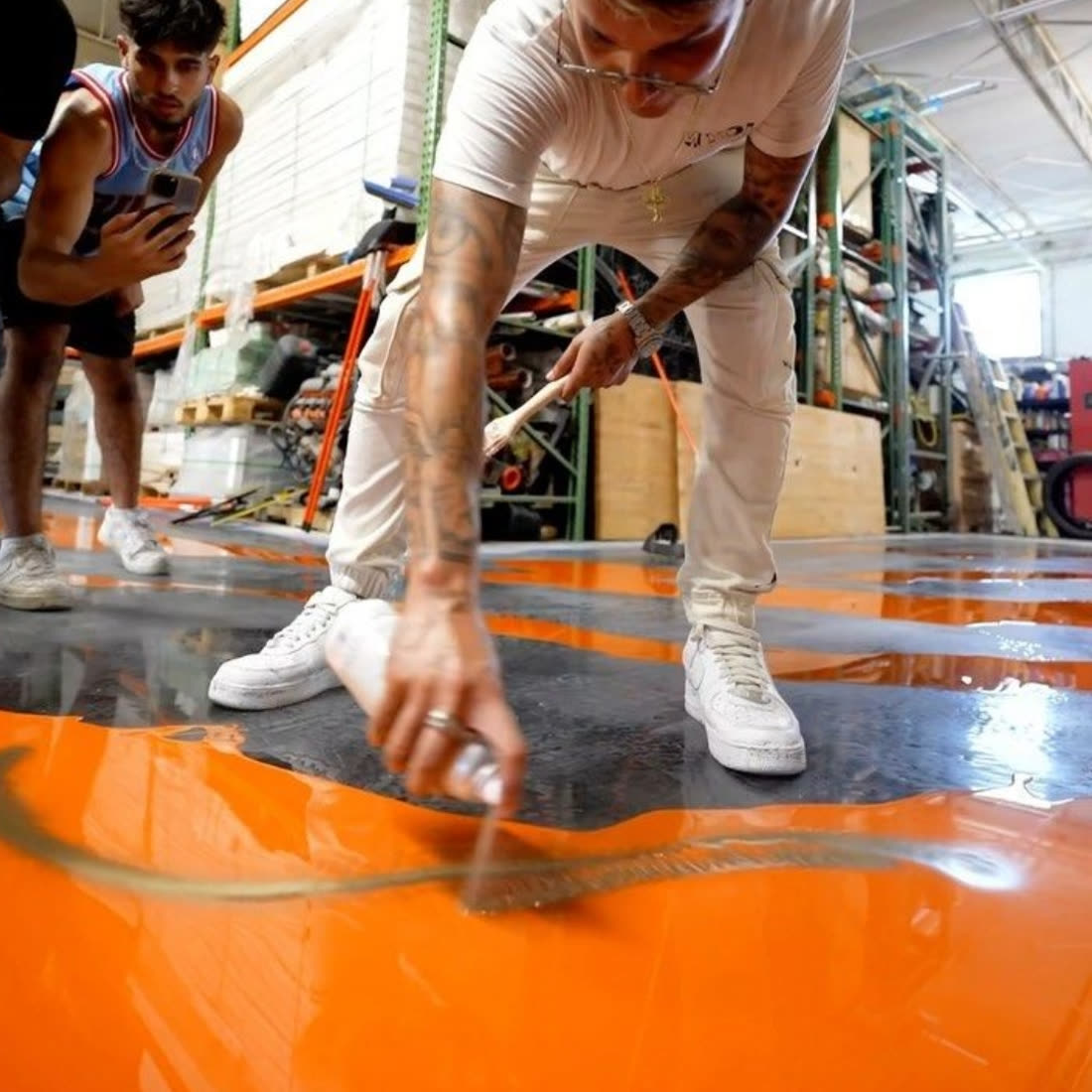
Full resin epoxy training with certification
Online, or 100% hands on in Miami. The same systems on this page, taught end to end, with certification at the finish.
 06
06
Concrete coating products
The materials themselves are available. If you are running your own jobs and want to work with what I work with, ask.
The things people ask first.
If yours is not here, send it over. I answer these myself.
What is the difference between the flake system and the metallic?
Why does the concrete have to be diamond ground first?
What is the moisture vapor barrier actually doing?
Why is the flake floor scraped and sanded before the last coat?
Do you sell the products, or only install?
Tell me about the floor.
Square footage, what the space is used for, and what you want it to look like. That is enough for me to tell you which system fits and what it takes.
Request A Quote See The Work